
New York : US President Donald Trump has publicly censured Israeli Prime Minister Benjamin Netanyahu, expressing deep dissatisfaction with Israel's military operations in Lebanon, the rising civilian casualties, and suggesting Syria could better manage Hezbollah.
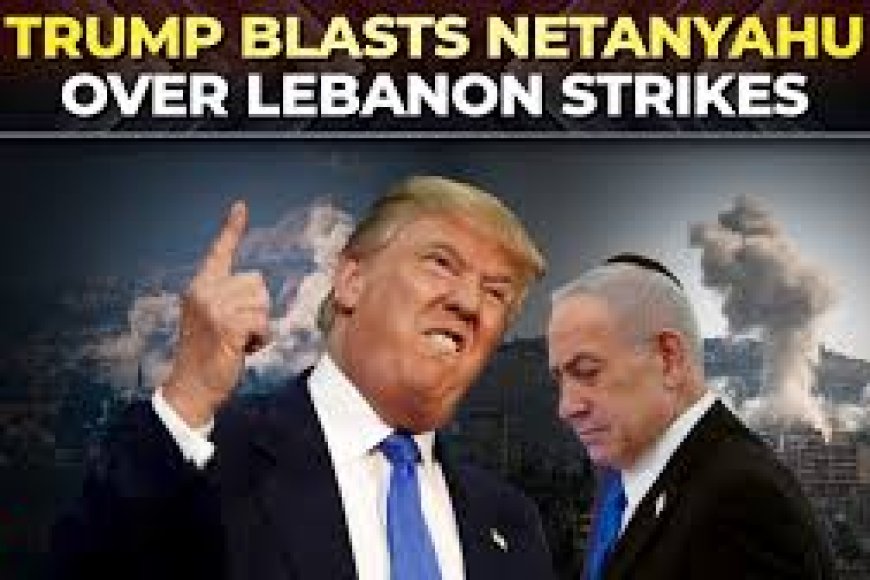
Trump blasts Netanyahu over Lebanon war
US President Donald Trump expressed sharp disapproval of Israeli Prime Minister Benjamin Netanyahu's handling of military operations in Lebanon, stating he was 'not satisfied'.
Trump criticised the extended hostilities and escalating civilian death toll, suggesting Israel 'should have been able to do the job faster'.
The US President proposed that Syrian President Ahmed al-Sharaa could more effectively oversee the containment of Hezbollah.
Trump voiced strong displeasure over an Israeli strike on Beirut that occurred just two hours before the US was to finalise a diplomatic accord with Iran.
The public reprimand highlights a widening chasm between Trump and Netanyahu regarding the conflict's trajectory and resolution.
Expressing sharp disapproval over the handling of military operations in Lebanon, United States President Donald Trump on Tuesday heavily censured Israeli Prime Minister Benjamin Netanyahu.
The American leader stated he was 'not satisfied' with Netanyahu, asserting that Israel 'should have been able to do the job faster' while floating a proposal for Syria to assume control over the management of Hezbollah.
Trump's Displeasure with Israeli Actions : Trump underscored that the extended hostilities have cast a 'negative light' on his diplomatic breakthrough with Iran.
He further voiced strong displeasure regarding an Israeli strike on Beirut that was executed a mere two hours before the United States was scheduled to finalise the accord with Tehran.
Amid intense, near-daily Israeli bombardments across Lebanon that have resulted in thousands of casualties, the US President strongly rebuked Netanyahu over the escalating civilian death toll.
Speaking on the sidelines of the G7 Summit in France, Trump remarked, "Israel is fighting Hezbollah too long and too many people are being killed. And you don't have to knock down an apartment house every time you're looking for somebody. Because there are a lot of people in those apartment houses. And they're not all Hezbollah, that I can tell you."
The US President suggested that Syrian President Ahmed al-Sharaa would be able to oversee the containment of Hezbollah with greater efficacy.
"And I suggested to Israel to let Syria take care of Hezbollah. Because, to be honest with you, I think they'd do a better job of doing it... He's [Sharaa] very capable. And he's been very good for me. He's protected everything that I've asked for... And if Israel can't do the job without killing everyone else, he'll do the job. Syria will do the job," Trump elaborated.
The theatre of war in Lebanon has emerged as a major point of friction in Washington, DC's diplomatic negotiations with Tehran.
While Iran has repeatedly emphasised that the Lebanese situation must be integrated into any comprehensive framework, Netanyahu has consistently bypassed international appeals for a cessation of hostilities, maintaining a sustained bombing campaign.
The public reprimand highlights a widening chasm between the two leaders regarding the trajectory of the conflict.
While the US administration appears focused on securing an expedited resolution, Netanyahu remains committed to sustaining the military offensive in Lebanon.
The friction intensified shortly after Trump publicised the breakthrough deal with Iran, with Netanyahu delivering a national address explicitly stating that he would not withdraw Israeli forces from occupied territories in Lebanon, Syria or the Gaza Strip.
In Lebanon, the Israeli military campaign has displaced more than 600,000 residents from their homes, enforcing a strict ban on their return.
Tel Aviv has indicated it is executing a wide-scale destruction of entire towns and villages across large sectors of occupied southern Lebanon, declaring intentions to maintain an indefinite military presence in the territory.