
VIJAYAWADA: Setting the stage for civic polls, the Andhra Pradesh State Election Commission (APSEC) on Wednesday issued the election notification and schedule for 100 Urban Local Bodies (ULBs), alongside the roadmap for upcoming elections to MPTCs, ZPTCs, and Gram Panchayats.
With the issuance of the notification, the Model Code of Conduct (MCC) has come into immediate effect across the State.
Addressing a media conference, State Election Commissioner (SEC) Anil Chandra Punetha announced that elections will be conducted for 100 Urban Local Bodies, comprising 13 municipal corporations—Greater Visakhapatnam (GVMC), Vijayawada, Vizianagaram, Eluru, Machilipatnam, Guntur, Ongole, Nellore, Tirupati, Chittoor, Kadapa, Kurnool, and Anantapur—as well as 77 municipalities and 10 nagar panchayats.
According to the official schedule released by the election commission, polling across all 100 Urban Local Bodies will take place on October 28. The counting of votes and announcement of election results will follow on October 30, the Election Commissioner said.
Meanwhile, elections for 23 other Urban Local Bodies remain temporarily deferred due to legal issues.
Grama panchayat polls to be held in 3 phases
The multi-tiered election roadmap extends heavily into grassroots administration through village tracks, featuring synchronised timelines for MPTCs, ZPTCs, and Gram Panchayats across three distinct phases.
MPTC and ZPTC elections follow an October 19 notification pipeline, with polling scheduled for November 3, and vote counting concluding on November 5.
Simultaneously, the Gram Panchayat elections are structured across three phases. Phase 1 polling on November 26, Phase 2 on November 29, and Phase 3 slated for December 2, culminating in final result declaration on December 3, 2026.
To ensure administrative readiness and smooth execution, the SEC has enacted several crucial directives.
Addressing widespread concerns regarding delays in securing mandatory documentation, the district administration has been explicitly instructed to issue caste and nativity certificates to interested candidates within 24 hours specifically for election purposes.
Highlighting the urgency behind these measures, the Election Commissioner emphasised during the briefing, “We are issuing instructions to ensure that caste and nativity certificates are provided to candidates within 24 hours strictly for election purposes.”
Financially prudent measures have also been integrated into security protocols.
Rather than blanketing every booth, closed-circuit television (CCTV) surveillance will focus intensely on sensitive, highly sensitive, and critical polling stations identified by the Police Department.
Acceding to requests from political entities, authorities have mandated that this CCTV footage be preserved for 60 days post-election to handle any late-stage grievances or disputes.
Law enforcement and code enforcement agencies are operating under strict mandates to maintain total neutrality and peace.
General Observers—comprising senior IAS officers—and Expenditure Observers from the Indian Forest Service have been deployed across all districts to monitor compliance with the Model Code of Conduct, and curb the illegal flow of liquor and cash.
District Superintendents of Police have been directed to ensure robust security arrangements during the filing of nominations, reinforcing earlier video-conference directives.
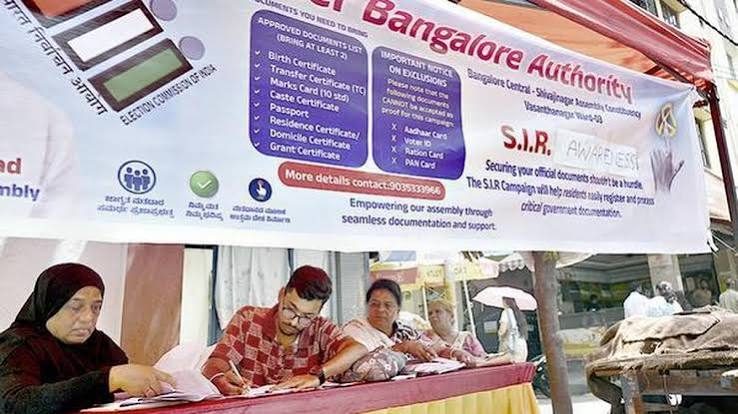
Furthermore, legal pragmatism dictated the decision to utilise existing electoral rolls updated up to May 26, 2026, successfully avoiding a four-month electoral delay that would have resulted from initiating a Special Intensive Revision (SIR).
Political parties and aspiring candidates are required to strictly adhere to established campaign expenditure limits, which have been tailored according to municipal and rural tiers—ranging from Rs 4 lakh for individual ward members, and up to Rs 25 lakh for municipal corporation mayors and proportional caps for rural seats.
The Election Commissioner emphasised that while new development schemes and promises designed to sway voters are barred once the code is active, ongoing welfare projects already in implementation may proceed without causing disruption to beneficiaries.
Regulations governing public displays, banners, and statues are actively enforced to prevent any single party from securing an unfair advantage.