

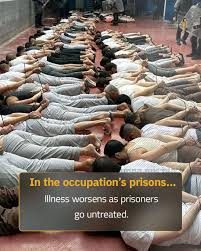
Israeli prisons : Around 80 per cent of Palestinians held in Israeli prisons, including women and children, are suffering from scabies, a skin disease that causes severe itching, the Palestinian Prisoners’ Society said on Sunday, November 8.
The society said the infection was spreading because prisoners lacked enough clothes and faced overcrowded living conditions. It also said they were not getting proper medical treatment.
The findings were based on visits by lawyers to dozens of prisoners in October and early November, as well as accounts from people who had been released.
More than 9,300 Palestinians are held in Israeli prisons, including around 90 women, according to the society.
Thousands of prisoners do not have enough clothes. In some parts of Naqab (Negev) Prison, broken showers have also made it difficult for prisoners to bathe.
Overcrowding has made living conditions worse. The society also said prisoners with serious illnesses and injuries were not getting the medical care they needed. Some require surgery and medical equipment.
Prisoners told lawyers that special units of the Israeli Prison Service regularly enter prison sections with weapons and police dogs.
They reported being hit with rubber-coated bullets and other weapons. Some suffered burns, while others were unable to move for some time.
Beatings also left prisoners with broken teeth, broken ribs and bruises.
In some prison sections, raids took place every two or three days.
During a raid on October 28, 2026, in Section 24 of Naqab Prison, officers reportedly sprayed gas and fired rubber-coated bullets at prisoners.
Three prisoners were injured, while several cells were raided and their occupants beaten.
A prisoner identified as A B told a lawyer that an earlier assault had damaged the tendons in his hand. He needs surgery.
Another prisoner, M K, said two of his teeth were broken during an assault.
Other prisoners described restrictions on their daily lives. M S said prison authorities removed mattresses during the day, forcing prisoners to sit on the floor or iron beds. He said this was especially difficult for elderly and sick prisoners.
M H said guards decided when prisoners could go into the prison yard. He added that overcrowding forced many prisoners to sleep on the floor. N Y said he was beaten during a security check and suffered bruises.
The society also said some prisoners were not allowed to sign legal documents needed by their lawyers to take up their cases.
Women held at Damon Prison also reported overcrowding, shortages of clothes, inadequate food and a lack of proper medical care.
Some suffered from muscle spasms and severe itching that kept them awake at night.
The society said prison authorities claimed the women had allergies rather than scabies. However, medical tests carried out on some women after their release confirmed the infection.
The society said prisoners were not receiving enough food and that its quality was poor. It pointed to the weak physical condition of prisoners after their release as evidence of the effects of prolonged hunger.
It warned that prisoners with serious illnesses, injuries and long prison sentences were at greater risk.
The organisation called on international human rights groups to take action over the reported assaults, poor medical care and living conditions in Israeli prisons.