
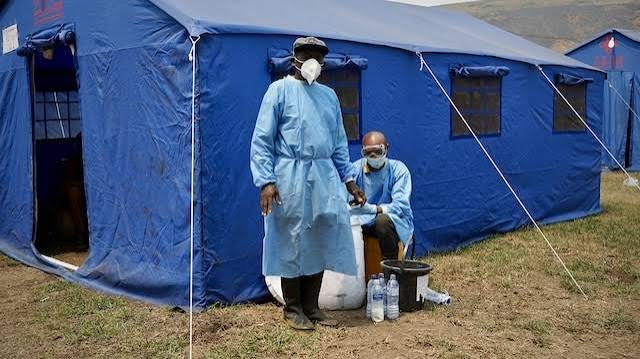
Nigeria: African health ministers were invited Wednesday to an “extraordinary virtual meeting” to discuss the spread of Ebola after Nigeria reported its first case of the disease that has claimed thousands of lives and has spread rapidly since an outbreak began in Congo in May.
Dr. Jean Kaseya, director general of the Africa Centers for Disease Control and Prevention, said the Oct. 28 meeting would “strengthen our collective response.” On Tuesday, Nigeria reported its first case, linked to a traveler from Uganda who arrived in the country earlier this month.
Uganda, which declared itself Ebola-free in July after recording 20 cases, has denied claims that Nigeria's first case originated there. Nigerian authorities said they were tracing 44 contacts.
The patient, a foreign national who entered Nigeria on Oct. 5, was initially treated for malaria symptoms but failed to recover, arousing suspicions in the attending physicians, Odianosen Ehiakhamen, an assistant director at the Nigeria Center for Disease Control, told a local media outlet late Tuesday.
He said the 44 contacts are mostly healthcare workers but also the patient's spouse, a Swiss national. Nigeria and Kenya, which has recorded nine cases, are the latest countries to report cases linked to travelers who passed through Uganda.
The latest outbreak was first detected in Congo in May after spreading undetected for months, according to the World Health Organization.
It has since infected more than 9,500 people and killed nearly half of them, making it the fastest-spreading Ebola outbreak in history. “Ebola is now affecting three regions of Africa. The situation demands urgent action and political leadership at the highest level,” Kaseya said in a post on X.
The WHO said on Wednesday that it had advised “all countries in the region to sustain a high level of readiness as the DRC outbreak continues to evolve.”
In parts of Congo, including North Kivu, health authorities say the disease is out of control, with most recorded deaths occurring in the community and contact tracing struggling to keep pace with the virus's spread.
The outbreak involves the rare Bundibugyo virus, for which there is no approved vaccine or treatment. France has also recorded a case.