

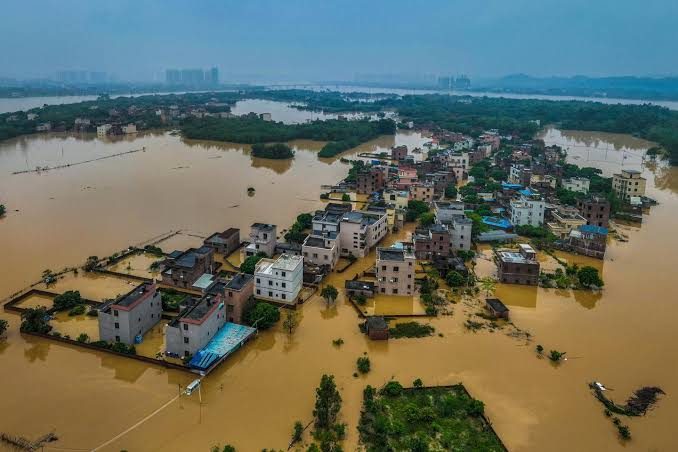
Around 1,500 people remain missing across Nepal and Tibet, with more than 900 missing in Nepal alone. The disaster has also affected foreign tourists and Indian nationals, with 288 Indians reported missing in Nepal.
In today’s episode of DNA, Indian media conducted a detailed analysis of the Nepal tragedy, the possible threat of another major disaster and the rescue operations underway in the affected areas.
According to the details, around 525 foreign tourists from 32 countries are among those missing in Nepal. More than 550 people are also missing in Tibet. So far, 21 Indian citizens have been rescued in Nepal, all of them from Tamil Nadu.
However, 33 people from Kerala, 32 from West Bengal and 49 from Tamil Nadu remain missing. Contact has also not been established with 62 people from other states.
Several Indians who travelled for the Mansarovar Yatra are stranded on the Chinese side. Around 200 Indian citizens have sought assistance from the Government of India for safe evacuation.
The Indian government is in contact with both Nepal and China to trace the missing citizens. India has also sent a second consignment of 37 tonnes of relief material to Nepal, comprising medicines and food packets, the Ministry of External Affairs said.
The immediate challenge for authorities is to locate and rescue people trapped under the debris.
The Nepalese Army and rescue teams are conducting search operations, while helicopters are being used continuously to assist the efforts.
Some elderly women were rescued from the debris after being placed on bulldozers. Rasuwa and Nuwakot have witnessed some of the worst impact of the disaster.
Media teams are present on the ground in the affected areas to report on the ongoing rescue operations.
China warns of another possible disaster
Amid the ongoing rescue efforts, China has warned that the danger may not be over. According to Chinese authorities, landslides and debris have created a natural dam in the mountains, leading to the formation of a new lake. Rising water pressure could cause the natural dam to break, potentially triggering another devastating flood in Nepal.
China’s Ministry of Water Resources said the new lake has formed near the confluence of the Chochhen Khola and Purupu Tsangpo rivers in Tibet. The area is located northeast of Gyirong Port and the Rasuwagadhi border, close to the location where the glacier collapsed.
Since the lake lies in the upper region of the China-Nepal border, a breach could send water directly downstream towards Nepal. The border areas of Rasuwa district could be among the worst affected, as the same region was hit by flooding a day earlier.
The surge could enter the Bhote Koshi, Lhende Khola and Trishuli rivers. Villages along these rivers, rescue teams, roads, bridges and several hydropower projects could face significant damage if another flood occurs.
5 million cubic metres of water could accumulate
According to information provided by China, around 2 million cubic metres of water had accumulated in the lake by Thursday morning, with water already beginning to overflow.
China’s Ministry of Water Resources has estimated that another 3 million cubic metres of water could accumulate over the next 72 hours. This would bring the total volume to around 5 million cubic metres, putting substantial pressure on the natural dam.
The dam has been formed from debris and loose soil. If the pressure causes it to collapse, the resulting flow could carry not only water but also mud, large rocks and debris downstream, potentially making it more destructive than the flood that struck Nepal a day earlier.
China has also released a video related to the situation. The warning comes amid earlier criticism that China had not informed Nepal about the glacier collapse in time, with allegations that an earlier warning could have helped save lives. By issuing repeated official warnings this time, China can demonstrate that it alerted Nepal and the international community about the potential danger.
The newly formed lake has also emerged as a threat to ongoing rescue operations, prompting authorities and residents to remain alert and, in some areas, move away from the danger zone.
USGS identifies glacier collapse as cause
The latest information has also shed light on the cause of the previous day's flooding. The disaster was initially linked to a magnitude 4.4 earthquake in the Himalayan region, which was believed to have triggered flooding in the Lhende, Bhote Koshi and Trishuli rivers.
However, the United States Geological Survey (USGS) has attributed the flooding to a glacier collapse rather than an earthquake.
According to the US agency, a glacier located at an altitude of around 17,000 feet collapsed on the morning of August 26 in Tibet. The glacier subsequently fell around 4,000 feet.
The collapsed glacier was approximately 2,000 feet wide. By comparison, a 24-coach Indian Express train is around 600 metres, or nearly 1,970 feet, long.
The massive fall of ice and rock from such a height caused the ground to shake. The event initially described as an earthquake tremor was therefore linked to the glacier collapse, with the ground shaking at a magnitude of 5.2.
As the ice fell from the great height, it broke apart and was crushed, turning into a flow resembling water. At around 8:30 am on August 26, the melting glacier, carrying rocks and water, struck the Lhende River.
The debris created a temporary dam across the river, causing water to accumulate. The temporary dam was located around 20 kilometres northeast of the Nepal-China border.
At approximately 9 am, the increasing water pressure caused the temporary dam to break, sending a massive flood towards the lower-lying areas. The resulting surge caused the Bhote Koshi and Trishuli rivers further downstream to swell, destroying everything in its path.