
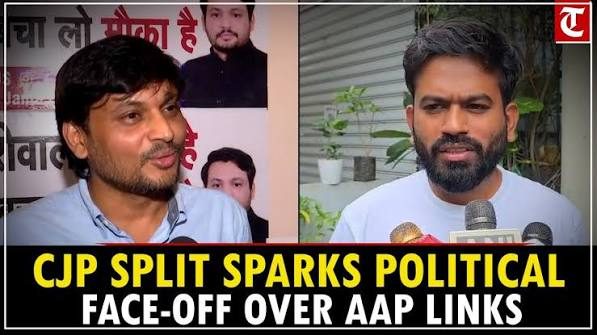
New Delhi : Activist Manish Brahmbhatt has launched the Cockroach Janta Party-Democratic (CJP-D), accusing the existing Cockroach Janta Party (CJP) of abandoning its student-led origins and aligning too closely with the Aam Aadmi Party (AAP), sparking a new wave of political dissent.
Activist Manish Brahmbhatt launched the Cockroach Janta Party-Democratic (CJP-D) as a new political platform.
Brahmbhatt accuses the original Cockroach Janta Party (CJP) of deviating from its student-led movement roots.
Allegations include CJP's alignment with the Aam Aadmi Party (AAP) and lack of representation for diverse volunteers.
The CJP-D aims to mobilise the collective strength of original movement participants through a democratic process.
The core issue for the original movement was injustice to students due to examination paper leaks, which Brahmbhatt claims the CJP leadership has failed to uphold.
Activist Manish Brahmbhatt on Thursday announced the launch of the Cockroach Janta Party-Democratic (CJP-D), positioning it as an alternative platform to the Cockroach Janta Party, accusing the Abhijeet Dipke-led organisation of moving away from the student-led movement from which it had emerged.
Brahmbhatt, who had earlier protested against the composition of the CJP's national working committee, alleged that the organisation had become a "handpicked team" aligned with Aam Aadmi Party (AAP) convener Arvind Kejriwal and was no longer adequately representing the volunteers and protesters who had participated in its agitation.
"Today, we are launching the Cockroach Janta Party-Democratic," Brahmbhatt said, adding that the new platform would seek to mobilise the "collective strength" of people who had participated in the movement.
The CJP, which initially emerged as an online satirical platform and later held a student-led agitation in Delhi over examination paper leaks and other issues concerning education, subsequently announced plans to expand its activities across the country.
Its founder Dipke has said the organisation would function as a public pressure group rather than entering electoral politics.
Allegations Against CJP Leadership : Brahmbhatt alleged that the CJP's newly constituted leadership did not adequately reflect the wider movement, and several members associated with AAP had been included while volunteers associated with other political parties and those who had participated in the protests were left out.
"Why are eight people involved exclusively from the Aam Aadmi Party?" he asked.
He alleged that volunteers associated with parties including the Shiv Sena, Samajwadi Party, RJD, BJP and the Congress had participated in the movement but were not represented in the new structure.
Concerns Over Representation and Core Issues : Brahmbhatt also questioned the representation of women, Muslims, Sikhs and students in the CJP's leadership, saying the movement had drawn participation from diverse sections and had primarily been centred on students' concerns over examination paper leaks.
"The core issue was the injustice faced by meritorious students due to paper leaks," he said, alleging that the present leadership had failed to uphold the movement's original objective.
Brahmbhatt and fellow activist Rahul Pandey had protested outside Dipke's residence in Chhatrapati Sambhajinagar in August, alleging favouritism in the constitution of the CJP's core committee and demanding greater representation for grassroots volunteers.
The protesters had claimed that around 450 coordinators associated with the Jantar Mantar agitation had not been represented in the committee.
CJP-D's Democratic Approach : Brahmbhatt said the CJP-D would instead seek to create a national team through a democratic process and involve volunteers and protesters in decision-making.
"If you proceed solely based on Kejriwal's agenda, without consulting volunteers or protesters, and fight against just one party, the country sees what is happening," he said.