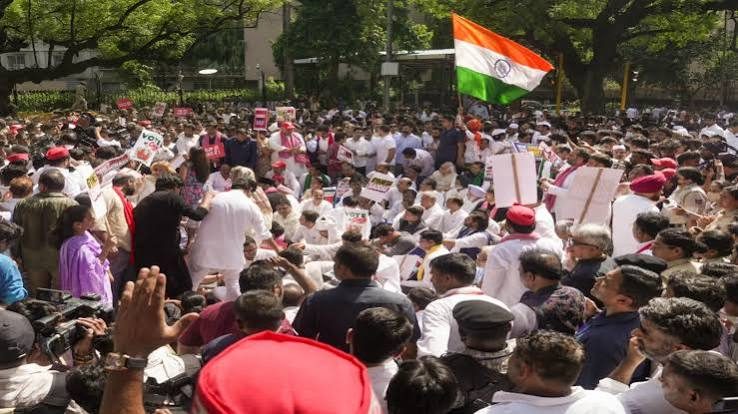

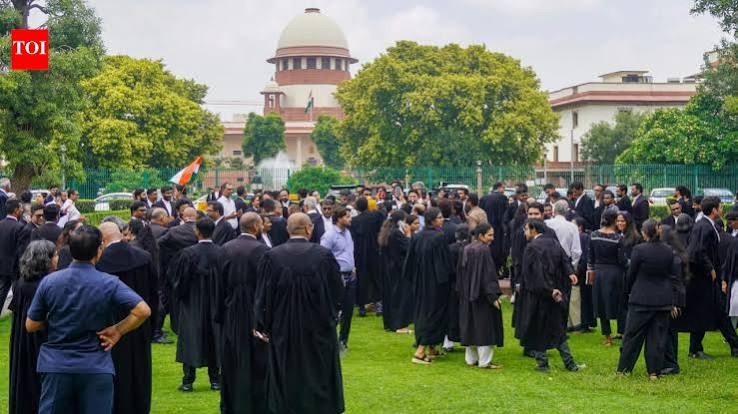
New Delhi : The Supreme Court has intervened in the ongoing Delhi protests, issuing crucial directives to the Centre regarding metro services, internet access, and the right to peaceful assembly, underscoring its commitment to protecting fundamental rights.
The Supreme Court on Sunday issued directions on a plea seeking contempt proceedings over alleged violations during the CJP protest in Delhi.
The court directed the restoration of normal Delhi Metro and railway services, with restrictions only permissible under Article 19(2) of the Constitution.
Internet services must be restored, subject to law and order conditions, and free movement of people should be allowed.
Illegal detention of peaceful protesters is prohibited, and lawyers and journalists must not be impeded in their duties.
Habeas corpus petitions related to mass detentions will be heard with main cases on October 13, with the SC affirming its duty to protect fundamental rights.
In a special sitting, the Supreme Court on Sunday passed a slew of directions while issuing a notice to the Centre on a plea seeking contempt proceedings for alleged violation of the court's direction regarding metro and train services in Delhi due to the CJP protest.
Key Supreme Court Directives
A bench of justices Joymalya Bagchi and V Mohana passed the following directions:
No illegal detention of people gathering peacefully except in accordance with the procedure established by law.
Restoration of normal Delhi Metro and railway services; restrictions permissible only when justified under Article 19(2) of the Constitution.
Internet services must be restored subject to law and order conditions.
Free movement of people subject to traffic regulations; requirement of barricades be reviewed.
Lawyers, journalists and others shall not be impeded in discharging their professional duties.
Peaceful assemblies must be allowed in accordance with law, especially outside areas where prohibitory orders under Section 163 BNSS are in force.
Any notice board announcing Section 163 restrictions near the Supreme Court must be removed, if still in place, to ensure unhindered access to the Supreme Court and other courts.
Habeas corpus petitions alleging mass detentions and other connected matters will be heard with the main cases on October 13.
Protesters reminded that protests should be peaceful and should not instigate others.
SC duty-bound under Article 32 to protect and enforce fundamental rights.