
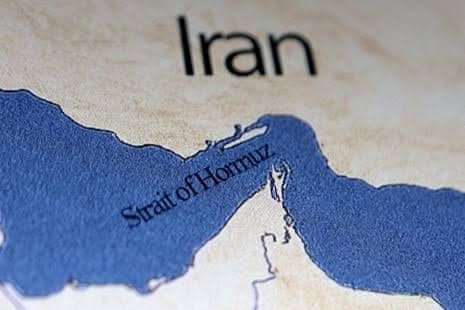
Tehran: Iran has rejected US President Donald Trump’s claim that Washington has “total control” over the Strait of Hormuz. It said the strategic waterway will not be reopened until the United States accepts Tehran’s conditions.
The Persian Gulf Strait Authority (PGSA), in a post on X, dismissed repeated statements from Trump and other US officials that the Strait is no longer blocked. It said such claims has not changed the situation on the ground.
“Claims and repeated posts by US officials that the Strait of Hormuz is no longer blocked do not change the reality: the Strait of Hormuz remains blocked and will not be reopened until Iran's conditions are accepted,” the PGSA said.
The statement came hours after Trump claimed that the United States had “total control” over the Strait and intended to keep it. He described the US naval deployment in the region as a “WALL OF STEEL” and said Iran could do nothing about it.
In a post on his Truth Social, Trump wrote, “The U.S.A. has total control over the Strait of Hormuz. I THINK WE WILL KEEP IT! Our Naval Blockade is being called, by everyone, 'A WALL OF STEEL,' and there is nothing Iran can do about it.”
He also claimed that Iran’s military infrastructure has been severely damaged. He ended the message with the words, “Praise be to Allah!”
“All they have is FAKE NEWS and 300% INFLATION, and getting worse! Iran is all talk and no action, the Bully of the Middle East No Longer. Praise be to Allah! President DONALD J. TRUMP,” he added.
Iran’s position has been made clear through senior officials in Tehran, with the reopening of the Strait dependent on demands concerning the ongoing conflict.
Mohsen Rezaei, the newly appointed head of Iran’s Supreme National Security Council (SNSC), said Tehran will not fully reopen the waterway until the United States met “all the conditions”.
In a post on X, he listed Iran’s demands, including an end to the US war and blockade, the release of Iran’s frozen assets and a region-wide ceasefire covering Lebanon and Gaza.
“IRAN's message is clear: the Strait of Hormuz will not reopen until the U.S. ends the war and blockade, releases Iran's frozen assets, and agrees to a region-wide ceasefire, including in Lebanon and Gaza,” Rezaei wrote.
He added, “Until all conditions are met, the Strait will remain closed.”
The statements from Tehran came amid weeks of military exchanges involving Iran, Israel and the United States across the region. The fighting has increased worries about a larger conflict and has brought the Strait of Hormuz back to the centre of the confrontation.
The waterway is one of the world's most important routes for energy shipments, carrying nearly 20 per cent of world’s petroleum trade. Any prolonged disruption can affect crude supplies, shipping costs and energy prices far beyond the Gulf.
Washington has deployed a major naval presence in the Gulf as the confrontation over Hormuz continues. The United States has said that protecting freedom of navigation is an important security objective in the region.
Trump’s comments came as Washington and Tehran continue indirect diplomatic contacts aimed at finding terms that could ease the crisis and allow maritime traffic to return to normal.
The diplomatic effort is taking place along with the military confrontation, with both sides maintaining firm positions over the Strait and the wider conflict.
Iran has repeatedly used control over access to the Strait as a bargaining tool. Tehran’s latest statements show that the waterway is being used as a bargaining tool in negotiations and to push Iran’s demands.
The Strait has a long history of becoming a flashpoint during regional military confrontations. Previous standoffs around the waterway have affected crude prices and raised concerns about a wider conflict involving Gulf states, Israel, Iran and the United States.