
New Delhi : Foreign Secretary Vikram Misri has said that international criticism and perceived stigmatisation of China over the COVID-19 pandemic hardened Beijing's attitude towards the global community, contributing to its harsh response to the outside world and a prolonged, draconian lockdown at home.
Speaking at the Iqwat Global Business Conclave, organised by an association of Kashmiri Pandits on Saturday, Misri said China felt that the international community was determined to blame it for the pandemic.
"COVID had already created a lot of stress multilaterally, internationally, but also bilaterally because the Chinese felt they were being stigmatised and were being blamed for COVID-19," he said.
Misri said India had never pointed fingers at China over the pandemic, but Beijing believed that the international community was trying to paint it black.
"So they had a very harsh response and harsh attitude to the international community in general for a while," he said, adding that this was also reflected in the "draconian lockdown" imposed on Chinese citizens for a considerable period.
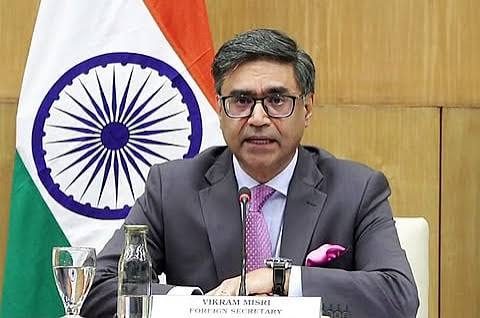
Foreign Secretary Vikram Misri.
India-China relations in 'abnormal state' since Galwan Valley clash, says EAM Jaishankar.
Recalling his tenure as India's Ambassador to China, Misri said the Galwan Valley clash in eastern Ladakh posed an unprecedented diplomatic challenge, particularly as it occurred at the height of the pandemic.
For the first time in nearly five decades, soldiers on both sides lost their lives along the Line of Actual Control (LAC), he noted.
The situation was further complicated by restrictions on travel and interactions during the pandemic, making it difficult to understand domestic perceptions in China and travel between Beijing and New Delhi.
"Anytime you flew out of China during COVID, returning meant a mandatory 21-day quarantine, 21 days of 'vanvaas' every time you visited Delhi for a day," he said.
Misri said the incident had triggered shock on both sides, with even China recognising that something serious had happened.
Speaking about Operation Sindoor, the Foreign Secretary said he was encouraged by the coordination among various government agencies during the campaign.
"We have not had too many instances where such a major, significant campaign involving so many important agencies of the government sees this kind of real-time coordination and activity," he said.