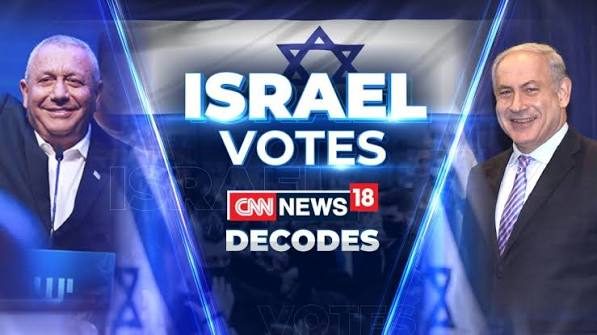


Israel's pivotal general elections are underway, witnessing the highest voter turnout since 1981 and setting the stage for a closely contested battle between Prime Minister Benjamin Netanyahu and challenger Gadi Eisenkot amidst critical national issues.
People walk next to a campaign banner of Prime Minister Benjamin Netanyahu's Likud party, ahead of the Israeli parliamentary election, in Bnei Brak, Israel, October 25, 2026.
Israel's general elections recorded over 16 per cent voter turnout in the first three hours, marking the highest participation since 1981.
Opinion polls suggest a tight electoral contest between incumbent Prime Minister Benjamin Netanyahu and his main rival, former army chief Gadi Eisenkot.
The election is significantly influenced by the aftermath of the October 7, 2023, attack and ongoing demands for government accountability.
Gadi Eisenkot has garnered public sympathy following personal losses during the conflict in Gaza, positioning him as a strong challenger.
The participation of Arab citizens, with an expected rise in turnout, is anticipated to be a crucial factor in determining the final election results.
Over 16 per cent of voters cast their ballots in the first three hours of the crucial general elections in Israel, the highest since 1981, as opinion polls suggested a tight race between Prime Minister Benjamin Netanyahu and his main rival, former army chief Gadi Eisenkot.
Record Turnout And Early Voting Trends
Polling stations opened across the country at 7 am local time and are scheduled to close at 10 pm, allowing 7,331,981 eligible voters to exercise their franchise at 12,018 polling stations nationwide.
Central Elections Committee Acting Director-General Din Livneh said 16.68 per cent of eligible voters had voted by 10 am, compared with 15.9 per cent at the same time during the previous elections. The turnout by 10 am is the highest recorded since 1981.
It is the highest turnout in the first three hours since 1981, when Menachem Begin was reelected as prime minister.
More than 1.2 million eligible voters had cast their ballots, he said.
Prime Minister Netanyahu, the longest-serving premier in Israel's history, and his wife, Sara, cast their ballots at a polling station in Jerusalem on election day, according to a statement released by his office.
"Go vote!" Netanyahu urged voters in Hebrew.
According to the military, the voter turnout among Israeli soldiers crossed 30 per cent by 10 am. In the last election, in 2022, it was 25.7 per cent at this hour.
The soldiers began voting in the national election a week ago, with 850 polling stations deployed at military bases across the country and beyond Israel's borders.
The polling stations in small localities, hospitals, prisons and nursing homes will close at 8 pm, according to the election schedule.
Tight Race Between Netanyahu And Eisenkot
The official results will be announced on November 4, while a broad indication of the election outcome is expected to emerge by Wednesday.
Opinion polls indicate that Netanyahu's Likud party and the opposition led by Eisenkot are competing in a close race, with neither side assured of the majority needed to form a government.
Netanyahu, 77, is seeking to retain power after three years of war and mounting demands for accountability over the October 7, 2023, attack.
Eisenkot, whose family has Moroccan Jewish roots, has emerged as a principal challenger, while former prime minister Naftali Bennett is leading a separate opposition alliance with Yair Lapid.
Eisenkot, 66, has drawn sympathy over personal losses during the war. His son and two nephews were killed while serving in the military during the conflict in Gaza.
Hundreds of thousands of Israelis have participated in demonstrations over the government's handling of the war and demands for accountability.
Netanyahu has resisted calls for an independent state commission of inquiry into the failures surrounding the October 7, 2023, attack.
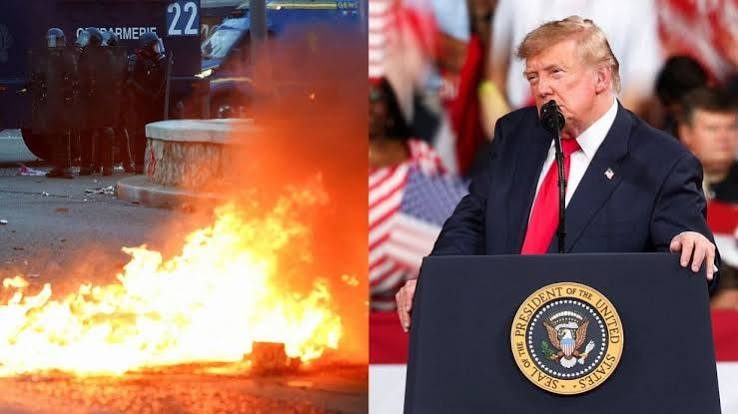
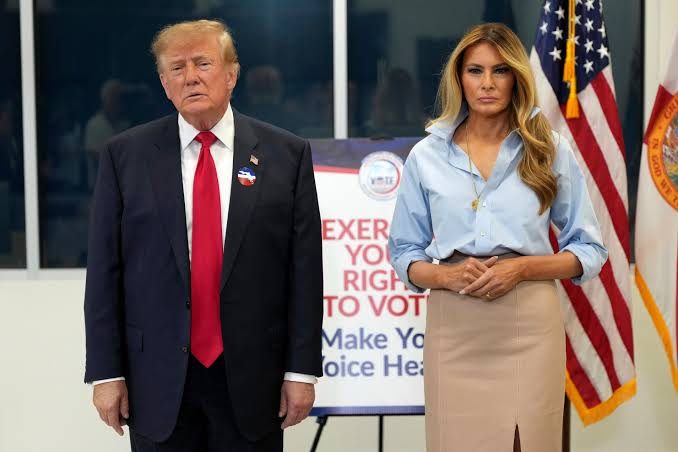
US President Donald Trump publicly backed Netanyahu ahead of the election and issued a further endorsement on Sunday, urging Israelis to vote for him.
The Crucial Role Of Arab Voters And Allegations
Arab citizens, who make up about 21 per cent of Israel's population, could play a significant role in the post-election arithmetic. Their turnout could influence the balance between the competing political blocs.
Pollsters expect Arab turnout to rise to around 63 per cent, compared with about 53 per cent in 2022.
The Arab-led Joint List and Ra'am, headed by Mansour Abbas, are running separately. The Joint List brings together Hadash, Ta'al and Balad, while Ra'am is an independent Islamist party.
Although the parties are not contesting the election as a single list, their leaders have sought to increase Arab voters' participation and influence over government formation.
According to The Times of Israel, Bedouin Arabs, including a reportedly unprecedented number of women, arrived at a polling booth in the southern town of Rahat.
Citing some of the voters, the paper said that far-right National Security Minister Itamar Ben Gvir has united them and galvanised them like never before.
Meanwhile, several parties, including Eisenkot's Yashar and Bennett's B'Yachad, alleged irregularities, including missing or defaced ballot slips and other suspected attempts to interfere with voting, the paper said.
However, the Central Elections Committee said there is no evidence of systematic tampering with ballot slips.
"Contrary to claims circulating online, there are currently no indications of systematic tampering with ballot slips," the committee said, adding that individual reports are being addressed immediately.