
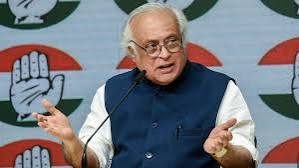
Congress leader Jairam Ramesh on Sunday urged the National Green Tribunal (NGT) to make public a High-Powered Committee report reviewing the environmental clearances granted for the Great Nicobar Island Project, which he described as “ecologically disastrous”.
Ramesh said the report, submitted to the NGT in a sealed cover on July 8, 2025, should be released and claimed it would be found to be “deeply flawed”.
His remarks came ahead of the Lok Sabha taking up the Tribunals Reforms Bill, 2026, which seeks to overhaul the functioning of 16 tribunals, including the NGT.
In a post on X, Ramesh said the Bill seeks to implement the Supreme Court’s directions in its November 19, 2025, judgment in the Madras Bar Association case. The court had struck down key provisions of the Tribunals Reforms Act, 2021, and called for an independent National Tribunals Commission.
Ramesh said he had joined the legal challenge against the 2021 law, arguing that the independence of tribunals was at stake. He also recalled challenging provisions of the Finance Act, 2017, which he alleged had weakened tribunals by incorporating amendments into a Money Bill.
The Congress leader accused the Modi government of ignoring criticism and judicial precedents, claiming the NGT had been a particular target because its independence was inconvenient to the government.
He said the government, after defending the 2021 legislation in the Supreme Court, was now being compelled to introduce reforms it had previously resisted.
“Hopefully the various Tribunals, and more particularly the NGT, will rediscover their voice and authority and fulfil their legal mandate in letter and spirit,” Ramesh said.
Congress general secretary Jairam Ramesh : Centre's justification of Great Nicobar project on strategic grounds is damage control spin: Congress
Calling for the NGT to signal a revival of its authority, he urged the tribunal to release the High-Powered Committee’s report on the environmental approvals for the Great Nicobar project.
The Tribunals Reforms Bill, 2026, proposes a National Tribunals Commission to oversee the appointment of chairpersons and members of various tribunals, with the aim of improving efficiency, independence, transparency and uniformity.
The proposed commission, to be headquartered in New Delhi, will have a chairperson and four members, including two judicial and two technical members. A retired Supreme Court judge or former chief justice of a high court will be eligible to head the commission.
The Bill states that the Supreme Court had struck down provisions of the Tribunals Reforms Act, 2021, citing concerns over separation of powers and judicial independence, as well as inconsistencies with earlier judgments on the appointment, tenure and functioning of tribunal members.
The Supreme Court had also directed the establishment of an independent National Tribunals Commission with professional expertise, transparent selection procedures and an oversight mechanism.
Once enacted, the new legislation will repeal the Tribunals Reforms Act, 2021.