
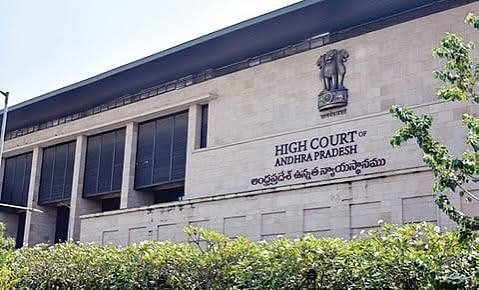
VIJAYAWADA: The Andhra Pradesh High Court on Friday observed that several petitions challenging the previous YSRCP government’s plan to establish three capitals would become infructuous as Amaravati has been accorded statutory recognition as the State capital by Parliament.
The court further directed the parties to place before it details of any other petitions that had become infructuous, and stated that classifying the cases issue-wise would facilitate their adjudication.
A three-judge bench comprising Chief Justice Lisa Gill, and Justices N Jayasurya and BS Bhanumathi, passed the orders while hearing a batch of petitions concerning the State capital.
A three-judge bench comprising Chief Justice Lisa Gill, and Justices N Jayasurya and BS Bhanumathi, passed the orders while hearing a batch of petitions concerning the State capital. The bench also deferred further proceedings in view of the possibility that the appeals filed by the previous government against the High Court’s March 3, 2022 judgment could come up before the Supreme Court on September 29.
It may be recalled that farmers from the capital region Amaravati, and several others had approached the High Court challenging the repeal of the Andhra Pradesh Capital Region Development Authority (CRDA) Act, and the legislation making a provision for decentralisation of administration through the proposed three-capitals arrangement.
After hearing the petitions, a three-judge bench on March 3, 2022 held Amaravati to be the sole capital, and issued a continuing mandamus to monitor the implementation of its directions relating to the development of the capital city.
The court had prescribed timelines for implementing the land pooling agreements entered into with farmers, handing over developed plots to them and providing infrastructure, including roads, drinking water, drainage and electricity.
The then YSRCP government challenged the judgment in the Supreme Court. The apex court subsequently stayed the timelines prescribed by the High Court concerning the provision of infrastructure, while the appeals remained pending.
During Friday’s hearing, senior counsel Muraleedhara Rao, appearing for some petitioners, submitted that the High Court had earlier issued a continuing mandamus, and that farmers who had surrendered their lands under the land pooling scheme were yet to receive developed plots.
He sought directions to the government to file an affidavit specifying a timeframe for handing over the developed plots.
The bench, however, pointed out that the Supreme Court had stayed the timelines fixed by the High Court, and said it could not prescribe fresh deadlines while the appeals were pending before the apex court.
The senior counsel argued that the Supreme Court’s stay was confined to timelines concerning infrastructure projects, and did not prevent the State from developing and handing over plots to farmers who had contributed land for the Capital Amaravati project.
Advocate General Dammalapati Srinivas informed the court that infrastructure and development works in the capital region Amaravati were progressing rapidly.
The Advocate General said the State had filed an affidavit in the Supreme Court on December 10, 2024, undertaking to complete infrastructure projects within three years, and sought disposal of the special leave petitions.