
NEW DELHI: The Supreme Court on Tuesday closed the seven-judge constitution bench reference on legislative privileges vis-a-vis free speech, terming it “infructuous”, and noted that the resolution passed in the Tamil Nadu Assembly in 2003, which was the trigger for the case, was withdrawn in 2004.
It clarified that the questions of law are left open for adjudication in an appropriate case where such conflict arises again.
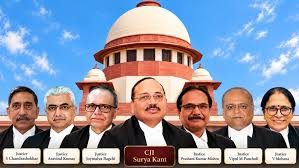
The bench, comprising Chief Justice Surya Kant and Justices Aravind Kumar, P K Mishra, Joymalya Bagchi, Vipul Pancholi, Shree Chandrashekhar and V Mohana, noted that the withdrawal of the impugned resolution skipped the notice of the court while passing the reference order.
However, it clarified that the questions of law are left open for adjudication in an appropriate case where such conflict arises again.
The case pertains to the 2003 resolution passed by then TN Assembly Speaker K Kalimuthu ordering the arrest of six journalists, including N Ravi, holding that the publication of an editorial on a newspaper had amounted to a breach of the privileges of the House.
After the journalists moved court, the issue concerning the interpretation of provisions related to the scope of legislative privileges of MLAs and its interplay with the fundamental right to freedom of speech and expression was referred to a five-judge bench in December 2003.
The top court then stayed the arrest and referred the matter to a seven-judge bench in view of conflicting verdicts on whether courts can review privilege.
One of the pleas — N Ravi and others v. Speaker, Legislative Assembly, Tamil Nadu — raises the question of whether fundamental rights override legislative privileges, which is still relevant for journalists.