

Matka King Review: Vijay Varma's Winning Bet
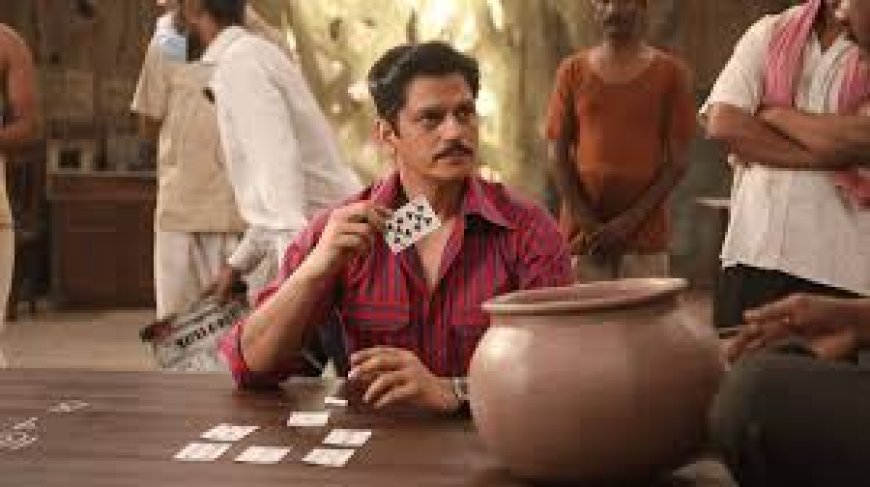
Bombay : Vijay Varma delivers a tour de force performance in Nagraj Popatrao Manjule's Matka King, a compelling eight-part series that chronicles the rise and fall of a gambling trailblazer in 1960s-1970s Bombay, notes Sukanya Verma.
Unlike Fandry, Sairat, Jhund or Unpaused: Naya Safar where Nagraj Popatrao Manjule broached the subject of Dalit identity, Matka King's politics stems from economic disparity.
Matka King's sepia-doused frames (Sudhakar Reddy Yakkanti), credible production design (Priya Suhass) and retro fashion (Priyanka Dubey) paints Bombay of yore in the same aesthetic as Vikramaditya Motwane's Jubilee, another period series streaming on Amazon Prime Video original.
There's a lot of thought and swagger put in the grandiose eloquence but eight episodes prove too many as the premise bites more than it can chew and bloats up over a course of neglected subplots and needless stereotypes.
Smoke-filled, dimly-lit joints strewn with cards, cash and the looming threat of raids or shutdown above their heads, the shady 'jua addas' enjoyed a frequent appearance in several Hindi movies of the 1970s and 1980s.
Despite my familiarity with the term, thanks to movies like Arjun and Dharmatma, I had no idea just how exactly the matka format of gambling works until Vijay Varma's Brij Bhatti got down to explaining its nitty-gritties in and as Matka King.
Directed by Nagraj Popatrao Manjule, the eight-part series based on Ashish Aryan's concept draws titular as well as character inspiration from the trailblazer of the gambling world, Ratan Khatri.
Subconsciously though, Manjule's source of creativity sounds a lot like Salim-Javed's Bachchan, a role model he paid glorious tribute to with the man himself in his Hindi debut Jhund as well.
The same -- marginalised becoming master of his own destiny by hook or crook yet driven by a strict moral code that wins the trust of common man and charms his harshest of critics until karma catches up -- tone imprints the rise and downfall of Brij Bhatti.
Brij Bhatti's Rise and Moral Code : Brij's angry young man is channelised in his sharp calculations and leap of faith bringing to mind Scam 1992's similar Bachchan-coded 'Risk Hai Toh Ishq Hai' modus operandi. His methods to rise above in stature may go against the law but his defence is reasoned in why the rich should have all the fun.
Gambling at race courses or buying state-instituted lottery tickets isn't all that different but when seen through a classist prism, distinction smacks of discrimination. Bachchan set a precedent for this antihero wherein the audience lapped up his 'Main Paanch Lakh Ka Sauda Karne Aaya Hoon Par Meri Jeb Mein Paanch Phuti Kaudiyan Bhi Nahi Hai' gumption to the hilt. Brij embodies the same spunk if not cynicism. On the contrary, he's a firm believer in umeed -- hope transcends class.
Unlike Fandry, Sairat, Jhund or Unpaused: Naya Safar where Manjule broached the subject of Dalit identity, Matka King's politics stems from economic disparity.
Spanning across events between 1964 to 1975, from the origins of matka in Mumbai, back when it was still Bombay, boasted of a booming textile industry till the labour strikes kicked in and marked the beginning of the end for its sprawling mills and make way for malls to the arrival of the Emergency and the mafia invasion in maximum city, history and fiction rush headlong as Brij finds his place in the sun.
The Genesis of Matka and Changing Dynamics : Living in a chawl with his pregnant wife Barkha (a mildly stoic Sai Tamhankar) and younger brother Lachu (an efficient Bhupendra Jadawat), Brij struggles to make the rent while working under the devious Laljibhai whose cotton empire fronts a sneaky gambling den for the labour class to bet their wages for winnings.
One day he runs out of patience and decides to start his own matka business and change the rules of the game where the opening and closing number would no longer be governed by the New York Cotton Exchange rates but by drawing three cards determining its matka themed lucky draw.
Transparency and improvisation is Brij's mantra. Punters shouldn't get bored, games cannot get stagnant, a lengthy understanding of his complex strategies underscores how it all hangs on chance and calculations.
Matka King's sepia-doused frames (Sudhakar Reddy Yakkanti), credible production design (Priya Suhass) and retro fashion (Priyanka Dubey) paints Bombay of yore in the same aesthetic as Vikramaditya Motwane's Jubilee, another period series streaming on Amazon Prime Video original.
Manjule and co-creator/writer Abhay Koranne highlights the stakes in a world of word-of-mouth in the absence of non-gadget, non-touch screen technology and sights of chalk and slate boards, surrogate advertising, security check sans metal detectors and sparsely populated roads sprinkled with bulky ambassadors and kaali peelis.
The newspaper bosses are pestering underlings for juicy details of the 'Pataudi-Sharmila' affair and South Bombay sounds echo a mix of the Marathi Manoos followed by the Gujarati, Parsi, Sindhi, Catholic and Muslim communities.
Personal and Political Intricacies : As Brij's fortunes change and his matka franchise finds outlets across the country, so does his equation with the people around him. But not always for the better.
Like his closeness to partner-in-crime Gulrukh (a super elegant, imposing Kritika Kamra), a Parsi widow volunteering to use her connections and introduce matka to an affluent society, a growing distance between him and his wife while she tries to find a sense of self-worth by resuming college, his tendency to treat his kid brother with condescension further pushing him to the dark side or taking his loyal sidekick (Siddharth Jadhav) for granted by not keeping his end of the bargain in an hour of need.
For all his 'shareef badmaash' imagery, Brij isn't beyond pulling some strings or using underhanded tactics to get ruthless rivals, pestering cops or corrupt politicians off his back.
The man's fair to a fault where gambling goes but self-serving in all other aspects -- sends son to boarding school when things get inconvenient, throws his most loyal aide's girlfriend (Jamie Lever) under the bus as it may threaten his business but rewards his backstabbing brother and his resourceful father-in-law with a big fat wedding proving blood is thicker than water.
The women have no autonomy in their men's business -- professional or personal, Manjule duly notes and objects over every now and then. In a telling moment, Barkha encourages her newly wedded sister-in-law's lack of domestic know-how by telling her not to bother with kitchen duties and pursue what her heart desires.
Despite an educated, wealthy background, Gulrukh, too, is made to feel guilty about her husband's death compelling her to seek solace in Brij's gentle reassurances. When Barkha and Gulrukh come face to face, the conversation is refreshingly mature and tender.
Critique of Society and Narrative Flaws : Matka King doesn't shy away from taking mild jibes at the erstwhile leadership.
At a soiree, a businessman grumbles how difficult it is to work with the government, 'they want a bribe for anything.' Journalists are forced to follow a narrative decided by orders from the top. Ministers are a classic case of wolf in sheep's clothing manipulating the system to serve their own interests.
There is a glimpse of Bollywood's mercurial ways too when Brij agrees to finance a film for a hero called Maqsood, clearly modelled on Mehmood, (a hilarious Cyrus Sahukar) and Dubai-operating, underworld's most notorious figure (a menacing Vineet Kumar Singh) itching to bring cricket betting to Indian shores.
Manjule's Marathi Manoos has its moment too, when Brij is relieved to hear a waiter speak his native tongue in a room full of anglicised accents. Most fun though is watching Gulshan Grover offering pearls of vile wisdom to Lachu who is basically the kind of toady, traitor character he played back in the day until he turned into a caricature of Bad Man.
There's a lot of thought and swagger put in the grandiose eloquence but eight episodes prove too many as the premise bites more than it can chew and bloats up over a course of neglected subplots and needless stereotypes.
A righteous journalist (an underused Girish Kulkarni) struggling to throw the limelight on Brij's gambling tricks, Lachu's resentment for his brother, Barkha's connection with her accounts professor, the corruption charges case of a telephone operator, Matka King takes too long to get back to a development or entirely forgets about it.
What is always on the show's mind and yours is Vijay Varma's tour de force performance. His charismatic explanation of how probability works made me wish he was my teacher in high school. His smooth shift from go-getter to God is quietly impactful.
When he claims, 'Main chahoon toh do din mein poore desh ka karza utaar sakta hoon,' here's a man who puts his money where his mouth is.