


Pahalgam Terror Attack: 'What Those Terrorists Did Was The Murder Of Humanity'
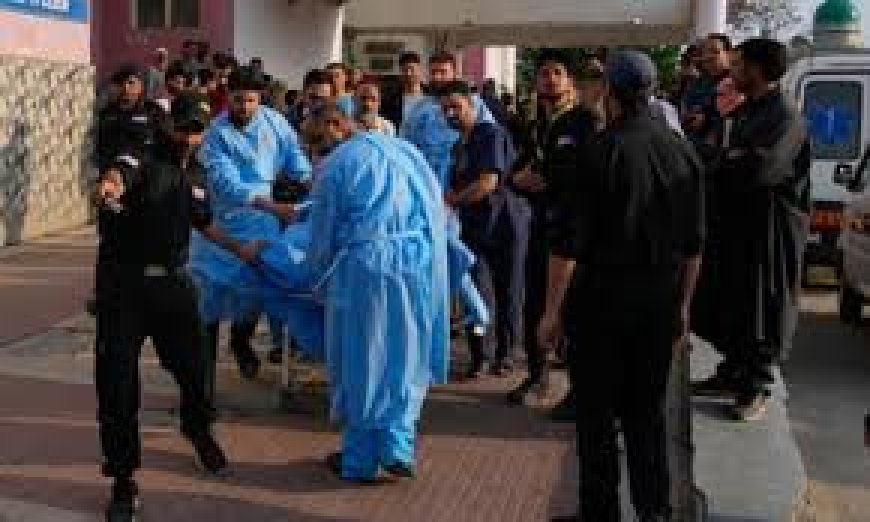
Srinagar : On April 22, 2025, at around 2.45 in the afternoon, a group of armed men in military-style camouflage emerged from the forest surrounding the Baisaran meadow near Pahalgam and opened indiscriminate fire on tourists.
The attack ripped through the quaint Baisaran meadow, snuffing out 26 innocent lives, mostly tourists, in the deadliest terrorist assault on civilians in the region in about 25 years.
Pahalgam -- which translates from Kashmiri as 'valley of shepherds' -- had, until that afternoon, been among India's most beloved holiday destinations, a sun-drenched highland resort that locals and visitors alike called Kashmir's 'Mini Switzerland.' The Resistance Front, an offshoot of Lashkar-e-Taiba, claimed responsibility for the attack.
Nazakat Ahmad Shah, a Pahalgam tourist guide, saved 11 tourists from Chhattisgarh during the terror attack on April 22, 2025, in which 26 people were killed by Lashkar-e-Taiba-linked terrorists. His cousin, Syed Adil Hussain Shah -- a local pony operator who attempted to snatch a rifle from a terrorist -- was killed in the attack; Nazakat missed his funeral, staying with his traumatised tourists until they flew home.
The attack devastated Kashmir's tourism economy for six months, wiping out income for hoteliers, pony operators, guides, and shopkeepers; Nazakat credits Lieutenant Governor Manoj Sinha's personal intervention -- meeting stakeholders, overseeing phased reopening of tourist spots -- as central to the recovery.
The Baisaran Valley remains closed a year later, though surrounding tourist spots have reopened with enhanced security deployments and a new QR code-based verification system for all tourism service providers.
Nazakat's message -- shaped by grief, personal loss, and an act of extraordinary courage -- is that humanity transcends religion, and Kashmir's welcome for every visitor from across India remains unconditional.
A local Kashmiri pony operator, Syed Adil Hussain Shah, attempted to intervene by snatching a rifle from one of the terrorists -- and was killed.
His cousin, Nazakat Ahmed Shah, a tourist guide from Pahalgam, was at the meadow that afternoon with a group of 11 tourists from Chhattisgarh.
When the shooting started, Nazakat did not run. He got every one of his guests -- four couples and three children -- flat on the ground, shepherded them out of Baisaran, drove them to safety in Pahalgam and then escorted them all the way to Srinagar.
He learnt of Adil's death only late that night. He did not make it to the funeral. The attack led to an exodus of tourists from Jammu and Kashmir, prompting authorities to shut nearly 50 tourist spots before reopening some in a phased manner after a security audit.
Throughout the long months of recovery, Nazakat repeatedly credits one figure above all others: Lieutenant Governor Manoj Sinha. The LG held meetings with tour operators, hoteliers, pony operators and other stakeholders in Pahalgam, assuring them that all restrictions on tourism would be eased once thorough security evaluations were complete.
Sinha subsequently ordered the phased reopening of tourist spots after extensive security reviews with police, intelligence and civil authorities.
As the first anniversary of the terror attack approaches, security has been further tightened across tourist spots, and a QR code-based identification system has been introduced for all tourism service providers in Pahalgam.
Despite the initial devastation, more than 17.7 million tourists visited Jammu and Kashmir through 2025, and the industry is now projecting visitor numbers in 2026 to surpass all previous records.
Two days before the anniversary, Nazakat spoke to Prasanna D Zore/Rediff.com. What follows is his account.
A year after the Pahalgam terror attack, the man who saved 11 tourists speaks about the day death came to Baisaran -- and why he chose to stay back to save lives and, in his own words, humanity.
'That moment when bodies were falling in front of me'
Two days from now, it will be a year since the Pahalgam attack. When you think back to that day, what is the one moment that still shakes you?
April 22, 2025 was a Black Day -- for all of India, for all of Kashmir. Nobody can forget it. That moment when bodies were falling in front of me -- that was the moment I felt death all around us, for myself and for everyone there.
I genuinely felt it was my last day on earth.
But I thought: Running away is not the answer. Some people ran, and there is nothing wrong in that. But some of us -- myself, Adil, and one other -- chose to stay back and help the tourists.
That choice was about one thing: Humanity. Nobody who was there that day will ever forget it.
I had taken a group of tourists from Pahalgam towards Baisaran. We planned to cover the walking trails first, then the three vehicle-accessible points afterwards.
We reached Baisaran at around noon. The weather was beautiful -- it had rained for the previous 23 days, but that day the skies had finally cleared.
My tourists were very happy. They were making reels, enjoying the zip-line activity, just thoroughly living the moment.
Then the first shots were fired. Several people fell to the ground around us. The first thing I did was get everyone flat on the grass.
One of my customers, Kuldeep Sthapakji, was in a very bad state -- his pulse had shot up, he was terrified.
I kept telling him: 'Brother, my life will go before yours. Don't worry. Stay calm.'
Keeping everyone's courage up, I brought the whole group back to Pahalgam -- and from Pahalgam, straight to Srinagar at full speed.
It was only after we reached Srinagar that I found out my cousin Adil had been martyred. And because the tourists still needed me -- they were far too frightened to manage alone -- I could not leave them.
I stayed with them until they boarded their flight, two days later. I never made it to Adil's funeral.
I have two daughters at home. Of course, I felt it. When those bullets were flying, I too thought it could be my last moment. But I kept thinking -- these people came here in my care, in my name. There was nobody else who had brought them from Pahalgam to Baisaran.
Without me, they had no one. Humanity is the biggest thing. What greater act is there than saving someone's life? That is what kept me going.
Your cousin Adil -- he was trying to stop the terrorists when he was killed. Do you still think of him?
The last time I saw him was right at the gate of Baisaran, just before we went inside. He was heading out for tea. I told him: 'I'll take these people around inside and then come for tea.' That was the last conversation we ever had.By ten or eleven that night, the news came that he was no longer in this world. I will never forget those last moments with him. He died doing what any decent human being would do.
The tourists from Chhattisgarh -- have you stayed in touch? What happened when you visited them?
They invited me to Chhattisgarh. When I arrived, they came out to receive me in a procession of 30 cars. Health Minister Shyam Bihari Jaiswalji, the former chief minister (Bhupesh Baghel) -- all of them honoured me. I am very grateful for the warmth they showed.
The attack devastated tourism in Pahalgam. What did those months afterwards look like for people here?
The first six months were very hard. Tourists were scared, bookings were cancelled. People who had taken loans to buy vehicles, hoteliers who had invested crores, local pony operators whose entire livelihood depended on daily tourist footfall -- everyone was sitting at home with nothing.
People like me, who earn by guiding tourists, had no work whatsoever.
But slowly, things started to recover, and I am deeply grateful to LG saheb -- to Lieutenant Governor Manoj Sinhaji -- for the role he played in making that happen. He stood shoulder to shoulder with the people of Pahalgam.
He met with tour operators, hoteliers, pony association members, shopkeepers -- he heard everyone out and assured us that the closed tourist spots would be reopened once the security review was done. And he delivered on that.
He personally oversaw the phased reopening of tourist destinations across Jammu and Kashmir. That gave people here tremendous confidence. I am also grateful to the local police and the security forces who backed up that effort with their presence on the ground.
'It is all moving in the right direction, and a lot of credit for that goes to LG saheb'
How many tourist points were reopened, and what is open now?
After the attack, nearly 50 tourist spots had been shut. LG saheb then announced the reopening of 24 points in phases, as security was established at each one.
Now some points are still closed -- Baisaran itself is still shut -- but the rest are open: Chandanwadi, Aru Valley, Betaab Valley, and others. Those remaining closed ones will also be opened in time.
It is all moving in the right direction, and a lot of credit for that goes to LG saheb.
Are tourists coming back? What is the mood like on the ground?
Tourists are coming, yes. Before the attack, in the first two to three months of 2025 alone, one crore (10 million) tourists had come to Kashmir. In all of 2024, two-and-a-half crore (25 million) visited -- hotels were full, houseboats were packed, there was room nowhere. That all stopped overnight after 22 April, 2025.
Now things are improving. Tourists are coming, they are staying overnight, which matters enormously for hotels and shopkeepers and everyone whose livelihood depends on visitors actually spending time here.
But honestly, some tourists are still hesitant -- they come but rush back to Srinagar rather than staying in Pahalgam. That affects everyone in the local economy. The direction is right, but we are not yet back to where we were. That will take more time.
This attack -- the gunmen reportedly asked tourists their religion before shooting. What has that done to the way you think about religion and humanity?
After that day, I can say with full conviction: Nothing is bigger than humanity. Not religion, not anything else. No religion in the world teaches you to take the life of an innocent person. Not one.
What those men did was the murder of humanity itself. It is completely and utterly wrong. All terrorists are a blot on humanity.
Some Kashmiris reportedly faced hostility in other parts of India after the attack. Did you experience or witness that?
There were a few incidents -- I heard of some people being troubled in Uttarakhand, one or two other places. But I want to say clearly: Kashmiri people have always been known for their hospitality. That is our identity and our pride.
One moment of darkness cannot erase Kashmiriyat.
One Nazakat may face difficulty, but there are thousands of Nazakats here. One Adil was martyred -- there are thousands of Adils still standing. We have always welcomed guests. We will always welcome them.
And to the terrorists -- to those who spread fear and kill innocent people -- what would you say?
What they did was the murder of humanity. Wrong will always be wrong -- it cannot be justified by any argument, ever. But let me also say this: LG saheb has ensured that forces are now deployed everywhere, at every tourist point.
Nobody needs to be afraid anymore. The security grid that is now in place -- with the full backing of the administration -- has changed the situation completely.
Come to Kashmir. You will be safe.
One year on, are you still guiding tourists to the same places?
Yes, every day. The security arrangements are much stronger now. Every point has police and security forces. I feel safe, my tourists feel safe. Life has to go on.
Your message to the people of India...
Please come. You are welcome here. You were welcome before, you are welcome today, and you will always be welcome. We stood for you then, we are standing now, and we will keep standing.
For every tourist who comes here -- you are our guest, you are our responsibility.
From my side, and from the side of every Kashmiri, you will be looked after better than ever before.
Come and see Kashmir for yourselves.